Most engineering teams do not skip security because they think it is unimportant. They skip it because the release is due on Thursday, the full scan takes forty minutes, and the last findings report had hundreds of entries nobody had time to triage. Security review drifts into a quarterly exercise, penetration testing happens a week before a major launch, and flaws that would have taken an hour to fix in a pull request turn into production incidents months later.
That pattern now carries a measurable price. In its 2026 Data Breach Investigations Report, Verizon found that exploitation of software vulnerabilities had become the most common way attackers got in, accounting for 31% of breaches and overtaking stolen credentials for the first time in the report's 19-year history. Unpatched code, vulnerable dependencies and misconfigured infrastructure are exactly what a delivery pipeline ships when nobody is checking.
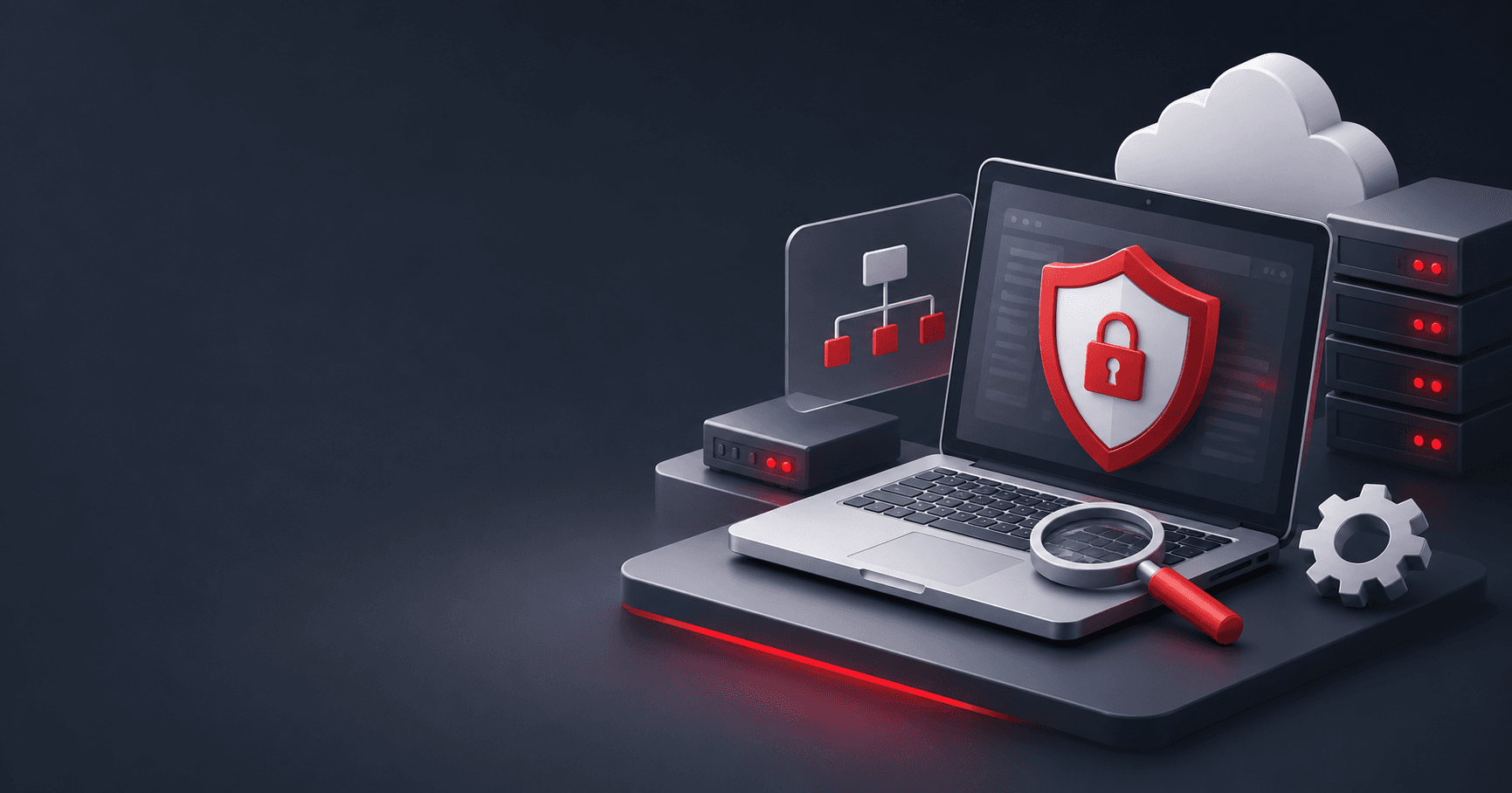
A DevSecOps pipeline closes that gap by placing security controls inside the same automated flow that builds, tests and deploys software. This article walks through what that looks like stage by stage, which controls deserve priority, where programs usually stall, and how organizations in regulated sectors such as financial services, healthcare and the public sector can make security part of delivery rather than a gate bolted onto the end of it.
Why Bolt-On Security Fails in a Continuous Delivery Model
Traditional application security was designed for release cycles measured in months. A security team could review a build, hand back a report and wait for fixes. When a team deploys several times a week, that model breaks in one of two ways: either the review blocks delivery and the business pushes back, or the review gets bypassed and risk is accepted by default without anyone formally accepting it.
Late findings are also expensive in ways that rarely appear on a budget line. The developer who introduced a vulnerable dependency three sprints ago has moved on, the context is gone, and the fix now has to be scheduled, re-tested and redeployed. Multiply that by dozens of findings per quarter and the security backlog becomes a permanent fixture that teams learn to ignore.
The threat has also moved closer to the pipeline itself. CI runners hold cloud credentials, deployment keys and package-registry tokens, and they pull code from third parties on every build. Verizon's 2025 report found that the share of breaches involving a third party doubled to 30%. A build system that installs unverified dependencies using long-lived administrative credentials is a supply-chain risk, regardless of how secure the application code is.
What a DevSecOps Pipeline Actually Involves
DevSecOps is often sold as a tool category, but tools are the smaller part of it. A working program combines three things: automated security checks at each stage of the pipeline; shared ownership, in which developers receive findings inside their normal workflow while the security team sets policy and manages exceptions; and evidence, meaning every build leaves a record of what was checked, what was found and who approved the release.
For teams that want a reference model, NIST's Secure Software Development Framework (SP 800-218) is the most practical starting point. It groups practices into four areas: preparing the organization, protecting the software, producing well-secured software and responding to vulnerabilities. It is a set of recommended practices rather than a regulation for private companies, but it has become a common reference point in U.S. software security policy, and NIST published a draft of version 1.2 in December 2025 in response to Executive Order 14306. Mapping pipeline controls to the SSDF gives engineering and compliance teams a shared vocabulary, which matters more than most organizations expect.
Stage One: Securing Code Before It Reaches the Repository
The cheapest place to stop a security problem is on the developer's machine. Pre-commit hooks that detect secrets, IDE plugins that flag insecure patterns as code is written, and repository rules that enforce branch protection and mandatory code review all catch issues before they enter shared history.
Secrets deserve particular attention. GitGuardian's State of Secrets Sprawl 2026 report counted roughly 29 million new hardcoded secrets in public GitHub commits during 2025, a 34% increase over the prior year. The same research found that internal repositories were about six times more likely than public ones to contain hardcoded secrets. A private repository is not a vault; it is a place where access is broader, review is looser and credentials tend to live longer.
Once a secret reaches a commit, deleting it in the next commit does not remove it from history. It must be revoked and rotated. That is why pre-commit detection pays for itself quickly: it prevents an incident instead of creating a remediation task.
Stage Two: Build-Time Scanning Developers Will Actually Use
The build stage is where most automated testing happens, and it is the natural home for static application security testing (SAST), software composition analysis (SCA) for open-source dependencies, container image scanning and infrastructure-as-code scanning. Each catches a different class of problem. SAST finds insecure code patterns, SCA flags known vulnerabilities and license issues in third-party packages, image scanning inspects base images and system libraries, and IaC scanning catches misconfigurations such as public storage buckets or overly permissive security groups before they are provisioned.
The technical setup is rarely the hard part. Adoption is. Scanners that run for half an hour on every pull request, or that fail builds over hundreds of pre-existing low-severity findings, get disabled within weeks. A more durable approach is to baseline existing findings, block only new issues above an agreed severity, post results directly as pull request comments, and move heavier full scans to nightly or pre-release jobs. Prioritizing by whether a vulnerable function is actually reachable, and whether the affected component is internet-facing, keeps the queue focused on the risks that matter.
Protecting the Software Supply Chain
Modern applications are assembled more than they are written. A typical service pulls in hundreds of open-source packages, a base container image maintained by someone else and a collection of third-party CI actions or plugins. Each is a dependency with its own attack surface.
The March 2025 compromise of the tj-actions/changed-files GitHub Action is a useful illustration. Attackers modified the action's existing version tags so that they pointed to malicious code that exposed CI secrets in workflow logs, and CISA issued an alert urging affected organizations to audit their workflows and rotate secrets. Teams that had pinned third-party actions to a specific commit hash rather than a movable tag were not exposed to the tag swap.
Practical supply-chain controls include pinning dependencies and CI actions to exact versions or hashes, routing package downloads through a private registry or proxy, generating a software bill of materials (SBOM) in a standard format such as CycloneDX or SPDX for every release, and signing container images so that deployment targets can verify what they run. Frameworks such as SLSA provide a graduated path for build provenance, so organizations can improve incrementally rather than attempting everything at once.
Secrets and Identity Inside the Pipeline
The pipeline is one of the most privileged systems in any organization. It can deploy to production, modify infrastructure and publish packages, which makes its credentials a prime target. The most effective improvement many teams can make is replacing long-lived static cloud keys with short-lived credentials issued through OpenID Connect federation, so that a CI job receives a token scoped to a single role that expires shortly after the job finishes.
Remaining secrets belong in a dedicated secrets manager such as HashiCorp Vault, AWS Secrets Manager or Azure Key Vault, injected at runtime, masked in logs and rotated on a schedule. Rotation is where many programs quietly fail. GitGuardian's 2026 research found that 64% of valid secrets detected in 2022 had still not been revoked by 2026, and Verizon's 2025 report cited a median of 94 days to remediate leaked secrets discovered in GitHub repositories. Detection without a tested revocation process simply produces a list of open doors.
Pre-Production Gates and Dynamic Testing
Static checks cannot see everything. Authentication flaws, broken access control and misconfigured headers often appear only when the application is running. Dynamic application security testing (DAST) and API security testing against a staging environment fill that gap, ideally as automated jobs that run on every release candidate rather than as an annual engagement.
This is also the stage for policy gates. Policy-as-code tools can block a deployment if an image has unresolved critical vulnerabilities, if an SBOM is missing, or if an infrastructure change would expose a database to the internet. Combined with controlled release strategies such as blue-green or canary deployments, these gates limit the blast radius of anything that slips through and make rollback a routine operation rather than an emergency.
Runtime Monitoring Closes the Loop
A deployment that passed every check on Monday can be vulnerable by Friday, because new CVEs are published continuously against components already running in production. Continuous rescanning of deployed images and dependencies, runtime detection on containers and hosts, and centralized logging with alerting tied to security events extend the pipeline's protection beyond the moment of release.
Runtime data is most valuable when it flows back into development. If a vulnerability is found in production, the pipeline should make it straightforward to patch, rebuild and redeploy within hours, and the finding should create a ticket in the owning team's backlog rather than a message in a security channel nobody watches. This feedback loop is what the SSDF describes as responding to vulnerabilities, and it is where mature programs separate themselves from those that merely run scanners.
Compliance Evidence Without the Spreadsheet Scramble
For organizations in regulated industries, a well-built pipeline doubles as an evidence system. Financial services firms handling cardholder data must meet PCI DSS requirements for developing and maintaining secure systems and software. Healthcare organizations must safeguard electronic protected health information under the HIPAA Security Rule. Public sector suppliers increasingly face NIST-aligned expectations, and SaaS providers selling to enterprises are routinely asked for SOC 2 reports that examine change management.
None of these frameworks requires a specific DevSecOps toolchain, and a pipeline alone does not make an organization compliant. What the pipeline does provide is consistent, timestamped proof: which code was scanned, which findings were accepted and by whom, which approvals preceded a production change, and which artifact was actually deployed. Teams that generate this evidence automatically spend audit season answering questions instead of reconstructing history from chat logs and screenshots.
Sequencing a DevSecOps Rollout That Sticks
The most common reason DevSecOps programs stall is trying to do everything at once. Enabling every scanner, blocking on every finding and announcing a new process in the same quarter produces alert fatigue and creative workarounds. A more reliable sequence starts with the controls that offer the highest signal and the least friction: secrets detection and dependency scanning. Once findings are baselined and teams trust the results, block new critical issues, then add container and IaC scanning, followed by supply-chain controls such as signing and SBOM generation, and finally DAST and runtime integration.
Progress should be measured with a small set of operational metrics rather than the raw count of findings. Mean time to remediate critical vulnerabilities, the share of builds that produce an SBOM, the number of long-lived credentials still in use and the percentage of deployments that pass through policy gates all show whether risk is genuinely falling. Teams unsure where they stand can use the RedFort US DevOps Maturity Scorecard or the 60-Second Risk Check for a quick, no-sign-up baseline before planning the first phase.
Making Security a Property of the Pipeline
Security that sits outside the delivery process will always lose to deadlines. The organizations that reduce risk without slowing down treat security checks the way they treat unit tests: automated, fast, owned by the people who write the code and enforced by the pipeline rather than by memory. With vulnerability exploitation now the leading breach entry point, the time between code being written and code being checked has become one of the most important numbers an engineering leader can shrink.
The practical path is incremental. Start with secrets and dependencies, earn developer trust with accurate results, then extend controls across the supply chain, pre-production testing and runtime. Each step reduces exposure on its own and produces the evidence that auditors, customers and boards increasingly expect.
RedFort US helps organizations build this kind of pipeline through its DevSecOps integration and CI/CD implementation services, embedding security scanning, policy checks and secrets management directly into delivery workflows, with compliance support aligned to NIST, HIPAA, PCI-DSS and SOC 2. If your releases are moving faster than your security reviews, talk to the RedFort US team about where your pipeline stands and what to fix first.